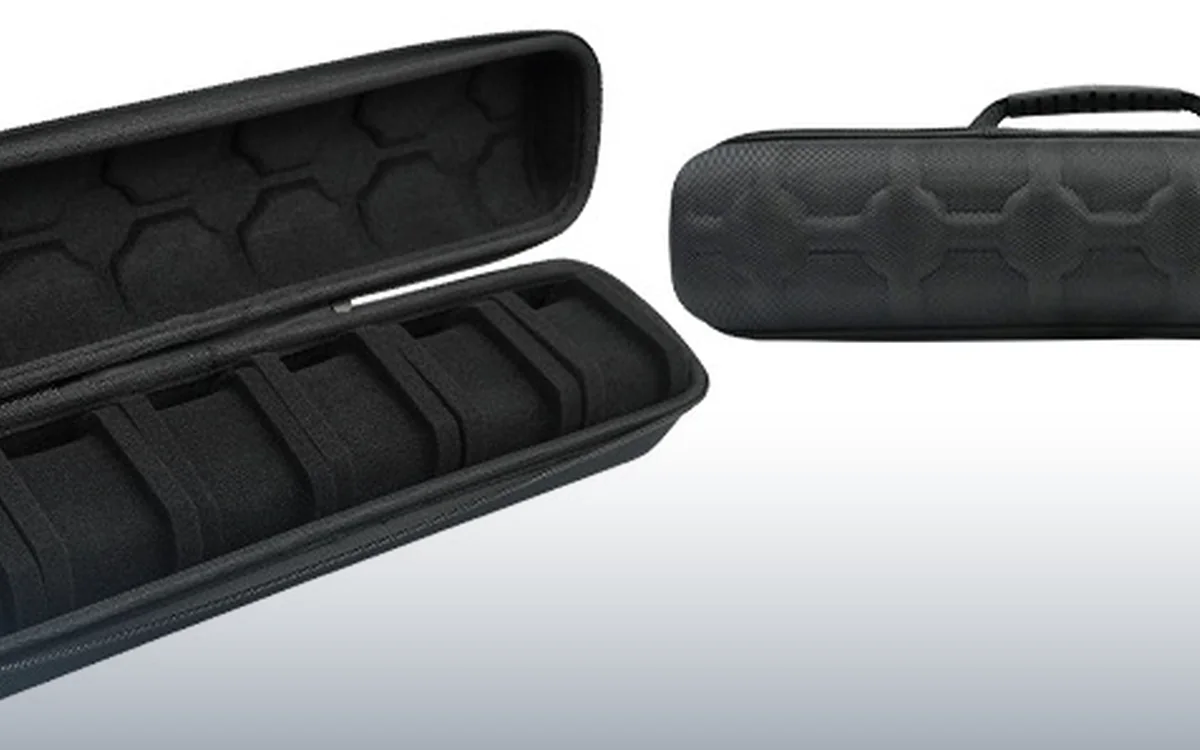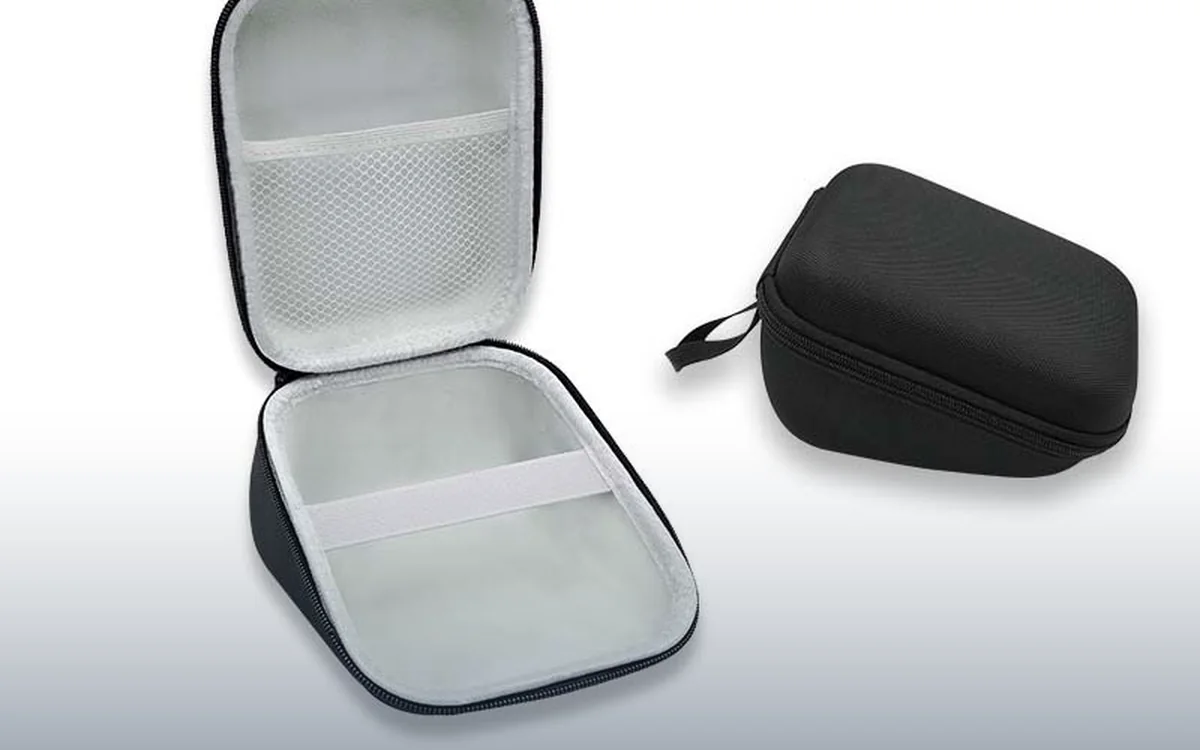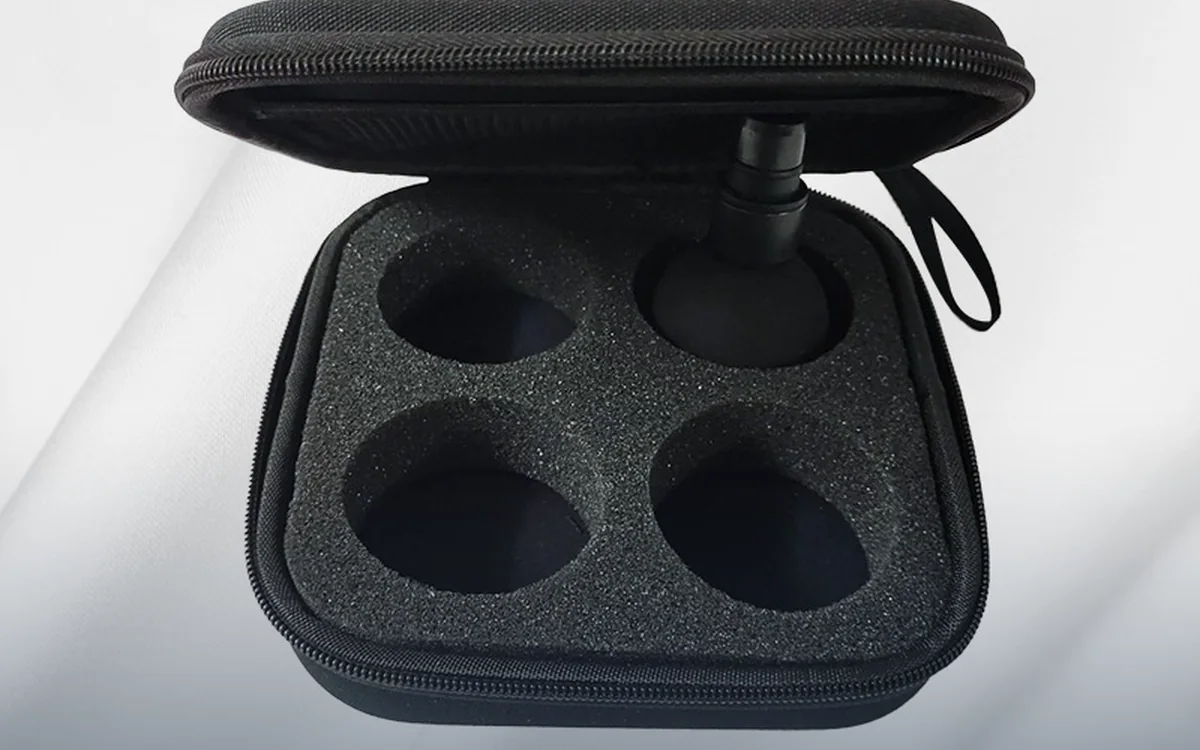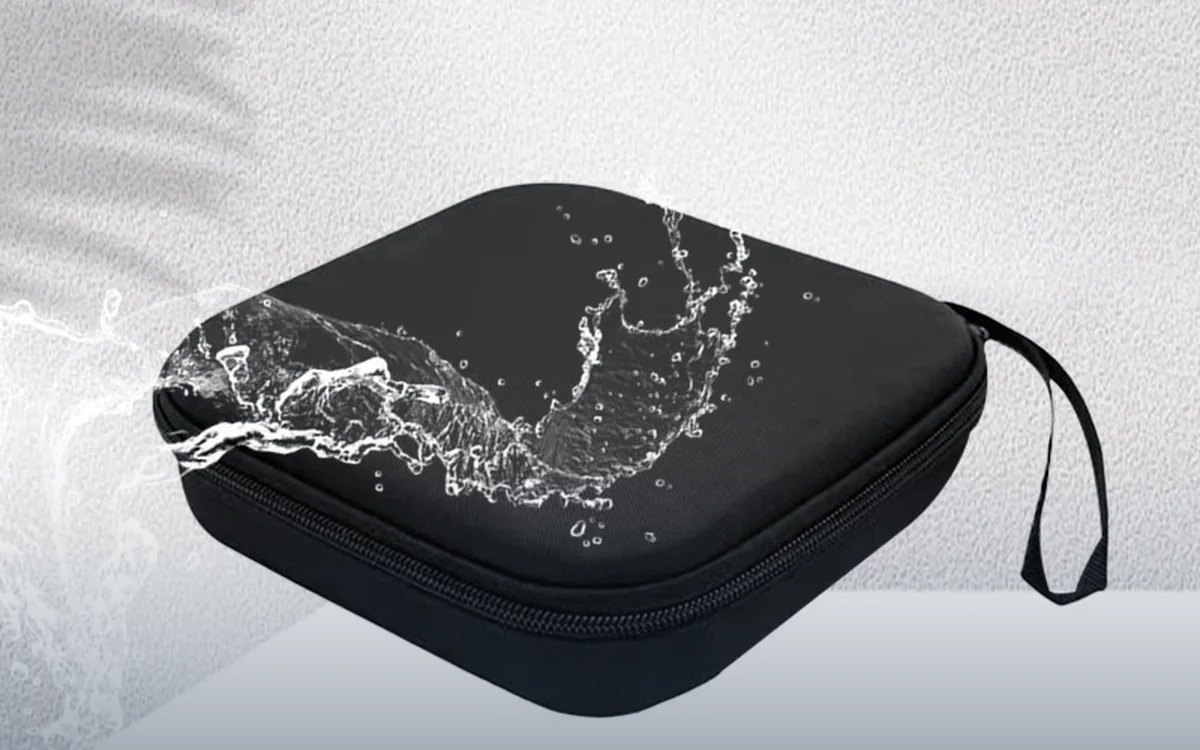
Drop height, zipper cycles and handle load are the three numbers that predict a return. Here is how each test runs, which rules apply, and how to read the paperwork behind a pass.
A hard case makes a promise: the device inside survives the trip, the zipper still closes after 5,000 uses, and the handle does not tear off when someone lifts a 12 kg case by one finger. A factory can make that promise in a brochure. Verifying it takes five tests, four document checks and the habit of asking for raw data instead of a summary page.
This is what each test does, which rules apply in the EU and the US, and how to tell a test report from a certificate that only repeats a logo.
The five checks that decide a case
Five tests map to the five ways a hard case comes back as a return:
- Drop — 1.2 m onto concrete, six faces, product installed.
- Zipper — 5,000 open-and-close cycles, then a burst check.
- Handle pull — 30 kg static load held for 60 seconds.
- Compression — 250 N on the lid for 10 minutes, deflection measured.
- Salt spray — 48 hours of neutral salt fog on the metal hardware.
Each one answers a specific failure: a cracked shell, a split zipper, a torn webbing loop, a collapsed lid, a rusted puller. Test what fails in the field, not what is easy to put in a report.
Drop test: 1.2 m on six faces
The case is loaded with the product or a weighted dummy of the same mass and dropped from 1.2 m onto a concrete floor, once on each of the six faces, in a fixed order. For a 1.5 kg drone case that is chest height on an adult; the same drop on a 5 kg tool case carries more than three times the impact energy. After each drop the shell is checked for cracks at the moulded corners, the zipper for burst seams, the insert for a cavity that no longer holds the device, and the product for function.
Write the pass criteria before the test: no crack longer than 5 mm in the shell, no zipper opening wider than 3 mm, the product still powers on and the buttons still click. A factory that reports "passed" without stating the criteria has recorded an opinion, not a result.
Ask for video of all six drops with the orientation labelled. It costs nothing and it separates a claim from evidence. A 38D insert and a 5 mm EVA shell usually pass at 1.2 m; an all-25D insert with 2 mm of clearance often does not.
Zipper: 5,000 cycles
The zipper test runs the slider end to end 5,000 times at about 60 cycles per minute, usually under a 0.5 kg side load, then checks the teeth for skipped engagement, the slider for play, the puller for deformation and the tape for separation from the shell. 5,000 cycles is roughly three openings a day for four years; 10,000 is the number for a case that opens at every shift in a workshop.
The failure is rarely the teeth. It is the stitching where the zipper tape meets the EVA shell, or the slider body on a #5 nylon coil loaded past its rating. Specify the size — #5 for a small electronics case, #8 or #10 for a tool case — and specify the brand if your market expects one.
After the cycle test, run a burst check: 200 N applied to open a closed zipper, with no more than 5 mm of separation. That is the test that catches a case which closes neatly but does not hold when the bag is over-packed.
Handle pull, compression and hardware
The handle test hangs 30 kg from the webbing handle for 60 seconds, then repeats at 10 kg for 500 cycles, with the load applied through a 40 mm bar so it spreads the way a hand does. A webbing handle with a box-X stitch at both ends holds; a single-row stitch pulls out of a 5 mm EVA shell at around 18 kg.
Compression puts 250 N on the lid for 10 minutes and measures deflection at the centre. Under 5 mm means the case can sit at the bottom of a 10-carton stack in a container. Over 10 mm and the lid touches the device, which is how a screen cracks without a single drop ever being recorded.
Salt spray uses a 5% sodium chloride fog at 35 °C for 48 hours to ASTM B117, applied to the zipper puller, the D-rings, the rivets and any metal plate. Acceptance is no red rust and no more than 5% of the plated area showing white corrosion. A 24-hour test is common and it is not enough for a case that spends 30 days at sea.
EU rules: REACH, RoHS, phthalates, AZO
REACH is the frame. The part that matters for a soft case is Annex XVII: 30 aromatic amines from azo dyes at a limit of 30 mg/kg, and four phthalates — DEHP, DBP, BBP and DIBP — at 0.1% by weight each. The SVHC candidate list is updated twice a year, and a substance above 0.1% triggers a communication duty rather than an automatic ban.
RoHS applies because a hard case often ships with electronics: a charging cable, a power bank, an LED. It restricts 10 substances, including lead at 0.1% and cadmium at 0.01%, and it applies to the electrical accessory rather than the EVA shell.
For a child's case — a pencil case, a first-aid kit sold to families — the test set widens to EN 71-1 for mechanical hazards, EN 71-2 for flammability and EN 71-3 for migration of 19 elements. A zipper puller small enough to fit a 31.7 mm gauge needs a design change or a warning, and that decision belongs at the drawing stage.
US rules: CPSIA and children's items
CPSIA applies to products designed or intended primarily for children 12 and under. A case in that category needs third-party testing at a CPSC-accepted lab, a Children's Product Certificate issued by the importer or the manufacturer, and lead limits of 100 ppm in the substrate and 90 ppm in surface coatings. Eight phthalates are restricted at 0.1% each.
The certificate is a one-page document naming the product, the rule, the lab, the date and the report it rests on. It is not issued by the lab and it is not a sticker on the carton. A supplier who sends a PDF with a laboratory logo and no rule citation has sent a report cover, not a certificate.
For an adult tool or electronics case, CPSIA does not apply, and the paperwork is the material test reports plus a conformity statement for whichever rule your own spec names. State that rule in the purchase order so nobody has to guess which document is expected.
Test report vs certificate: the difference that matters
A test report is a record of one laboratory job on one sample: a job number, a sample description, a method, a result and a date. A certificate is an attestation under a scheme — a Children's Product Certificate, an OEKO-TEX Standard 100 certificate, a CB report — and it has a scope and an expiry date.
Four things to check on any report before you accept it:
- Job number and accreditation — CNAS, CMA or an ILAC-MRA signatory, with a number you can verify on the lab's own site.
- Sample identity — the exact material, for example "EVA foam, 38D, black" or "1680D polyester, PU coated", plus a photo of the sample.
- Method and limit — the standard and its year, and the limit the result is compared against, not just a pass mark.
- Date — a report older than 12 months, or one issued against another supplier's material, describes a different product.
The common trick is a report for a similar material: the EVA is tested, the PU-coated 1680D face is not, and the zipper tape is untested. Test the materials that touch skin and the materials that carry the printed logo, because those are the two categories a regulator samples.
How to ask for evidence
Ask for the whole file, not the summary page: the report PDF with raw data, the sample photographs, the accreditation number and the standard cited with its year. Then verify one item independently by opening the lab's website and checking the job number.
- Name the material and the colour in the request, so the answer can be matched against your bill of materials.
- Ask for the current version of each report with its issue date, not "our test reports".
- Ask which tests were not done; a short honest list is worth more than a complete-looking one.
- Offer to pay for a fresh test on your own sample — US$200–600 per test at an accredited lab is cheap against a container held at customs.
- Ask for incoming material records, which show whether the tested lot is the lot the factory actually buys.
We do not claim a certificate on the wall. Ask for the current test reports for the exact EVA, fabric, zipper and hardware in your bill of materials, and they will be sent with the quotation — including the results that did not pass first time.