Printed face
Full-colour print on the face fabric for a licensed or seasonal look, from 500 pcs per design.
A 160 × 150 × 70 mm hard case with a moulded cradle for the player, an eight-card sleeve beside it and a lid pocket for the charging cable. The card slot stays reachable, so cards go in without taking the player out.
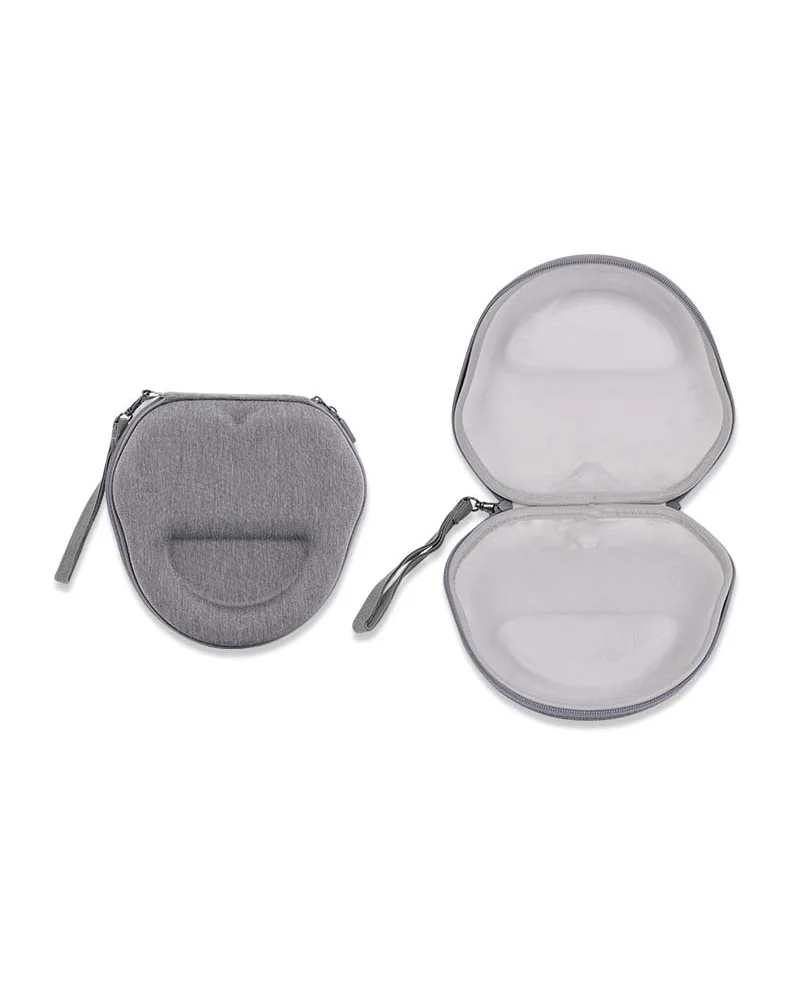
A Yoto Player is a speaker with a card slot on top and a dial on the side. Pack it badly and the two things that break first are the card slot and the dial: a case that grips the body too tightly presses on the slot, and a case with a loose cavity lets the player slide until the dial takes the impact. The cavity has to hold the body with the slot still reachable, so a card can go in without pulling the player out of the case.
The case we build is 160 × 150 × 70 mm: a moulded cradle for the player, a sleeve beside it for a stack of eight cards, and a mesh pocket in the lid for a charging cable. Shell is 5 mm EVA at 25 kg/m³, faced in 600D polyester or printed 1680D, lined in jersey. Weight is 210–230 g empty, which matters when the case goes into a school bag with a lunch box.
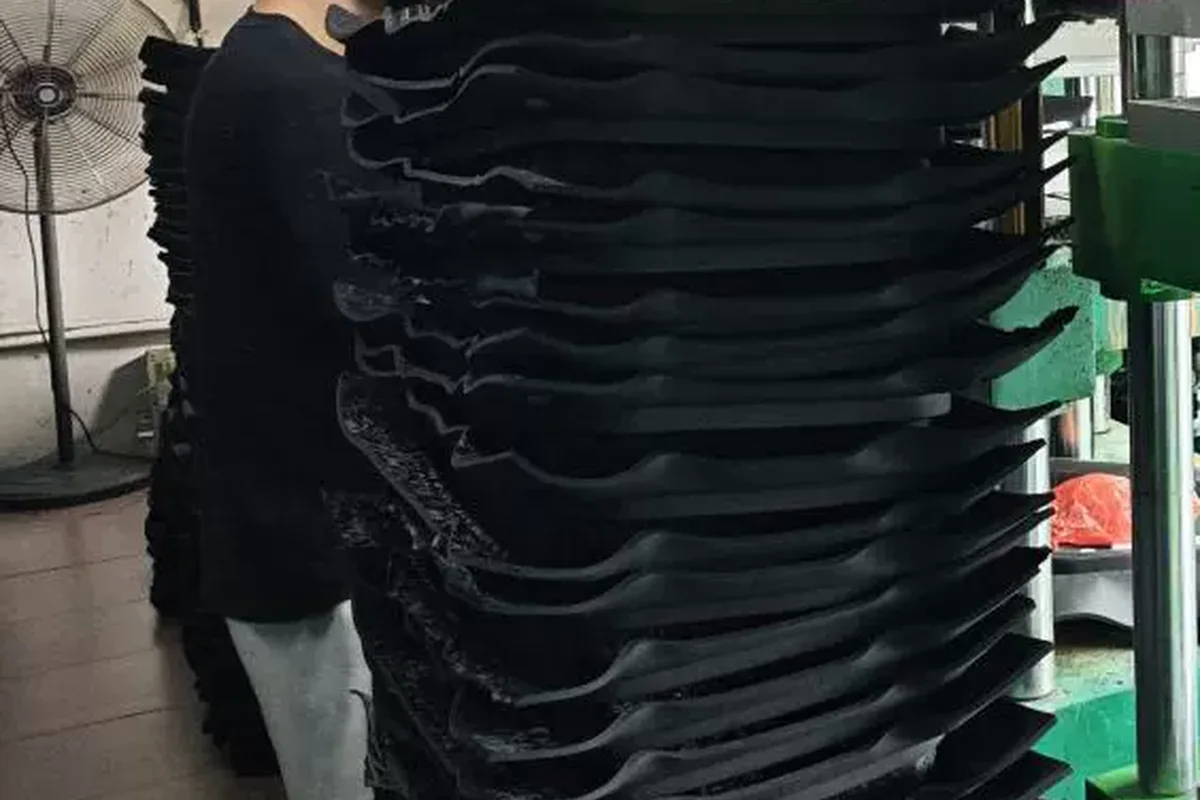
The cradle is drawn from a physical player or a 3D file. A CNC-cut aluminium master takes 15–20 days, then the first shells are pressed within three days. We fix the wall thickness, the corner radius and the insert outline before quoting the tool, because moving any of them afterwards means re-cutting it.
Tooling is US$600–1,400 for the shell mould and US$150–300 for the die-cut insert, credited against 2,000 pcs. Where the player is close in size to a mould already on file — we hold 300+ — the case can be re-cut with a new insert only, at 7–10 days and no shell tooling cost.
Each new shell is dropped at 1.2 m on six faces with a 1.2 kg dummy inside — about four times the weight of a player and its cards — and passes when the cavity keeps its shape and corner compression stays under 1 mm. A case that protects the shell but lets the player rattle is a fail, so the fit is checked with the actual unit before the test.
The zip runs 5,000 open-and-close cycles on a jig, the handle is pulled to 30 kg, and cartons are drop tested to ISTA 3A. Reports and photos come with the pre-production sample, not after the goods ship.
Any of these can change; the ones that change the tool are the size and the cavity.
Full-colour print on the face fabric for a licensed or seasonal look, from 500 pcs per design.
8 cards as standard, 4 or 16 on the same shell by changing the sleeve depth.
Mesh pocket for a charge cable, or an elastic band for a spare card.
A clear window on the back for a written name, printed on the insert legend.
At 25 kg/m³ the shell is light and flexes on impact, which is what a 200 g case wants to do. At 38 kg/m³ it holds its shape under a stack of cartons but adds roughly 15% weight. For a children’s product the useful range is 25–30 kg/m³: light enough to carry, firm enough that the camera-grade corner radius does not flatten after a term of use.
Wall thickness is the other lever: 5 mm is standard, 8 mm on the lid only adds about 20 g and doubles the resistance to a point load, which is the failure you see when a case is at the bottom of a bag. Hardness sits at 35–45 Shore C on the sheet we press, and a 10 mm base pad under the cradle keeps a dropped case landing on foam rather than on the shell floor.
The lining is jersey rather than velvet because it wipes: a damp cloth with a little mild soap takes crayon and juice off 210D polyester without leaving a mark, and the printed face can be wiped the same way. Do not machine wash and do not tumble dry — the moulded wall softens from about 70 °C and will lose its shape in a dryer, and the foam holds water for 24–36 hours once soaked.
For a deeper clean, wipe with 70% isopropyl alcohol and leave the lid open for ten minutes. The case is a storage and transport shell, not a watertight container: the standard zip is water-resistant, not IP-rated, so it is not the right product for a beach bag or a bathroom shelf.
We reply within 12 hours with tooling, a unit price at 300 and 3,000 pcs, and a sampling date. A 300-piece order is enough to test the case in the channel.
The same mould room and press floor build these pages and products.
Moulded cases for headphones, keyboards, mini PCs and audio players.
Read moreEmboss, heat transfer, silk screen and metal plates with strike-off before bulk.
Read moreWhat is possible from 100 pcs on a stock shell, and what needs 500.
Read moreSend the device you need to pack, the quantity and the artwork you already have. We reply with a cavity drawing, a unit price at 300 and 3,000 pcs, and a sampling date — within 12 working hours.